
SHIMBASHI
gluten-free / soba noodles / sushi / bar
Melbourne made
vegetarian + vegan friendly
What Is Buckwheat? Flour, Nutrition & Why It Makes Better Soba
Buckwheat is the defining ingredient of soba noodles. It gives them their distinctive colour, their nutty flavour, and their nutritional profile. Yet despite its name, buckwheat has nothing to do with wheat — and understanding what it actually is helps explain why quality soba is so different from ordinary noodles. At Shimbashi Soba restaurant in Melbourne, the entire menu is built around this ingredient, stone-milled fresh from Tasmanian buckwheat each day.
Buckwheat Is Not Wheat
The name is misleading. Buckwheat (Fagopyrum esculentum) is not a grass, not a cereal grain, and not related to wheat at all. It is a flowering plant in the family Polygonaceae — the same family as rhubarb and sorrel. The seeds of the buckwheat plant are what we eat.
What is buckwheat made from? Simply put: the seeds of this flowering plant, harvested, hulled, and either eaten whole or milled into flour. What is the difference between wheat and buckwheat? The most important distinction is botanical — wheat is a true cereal grass, buckwheat is a broadleaf plant. They share no botanical relationship.
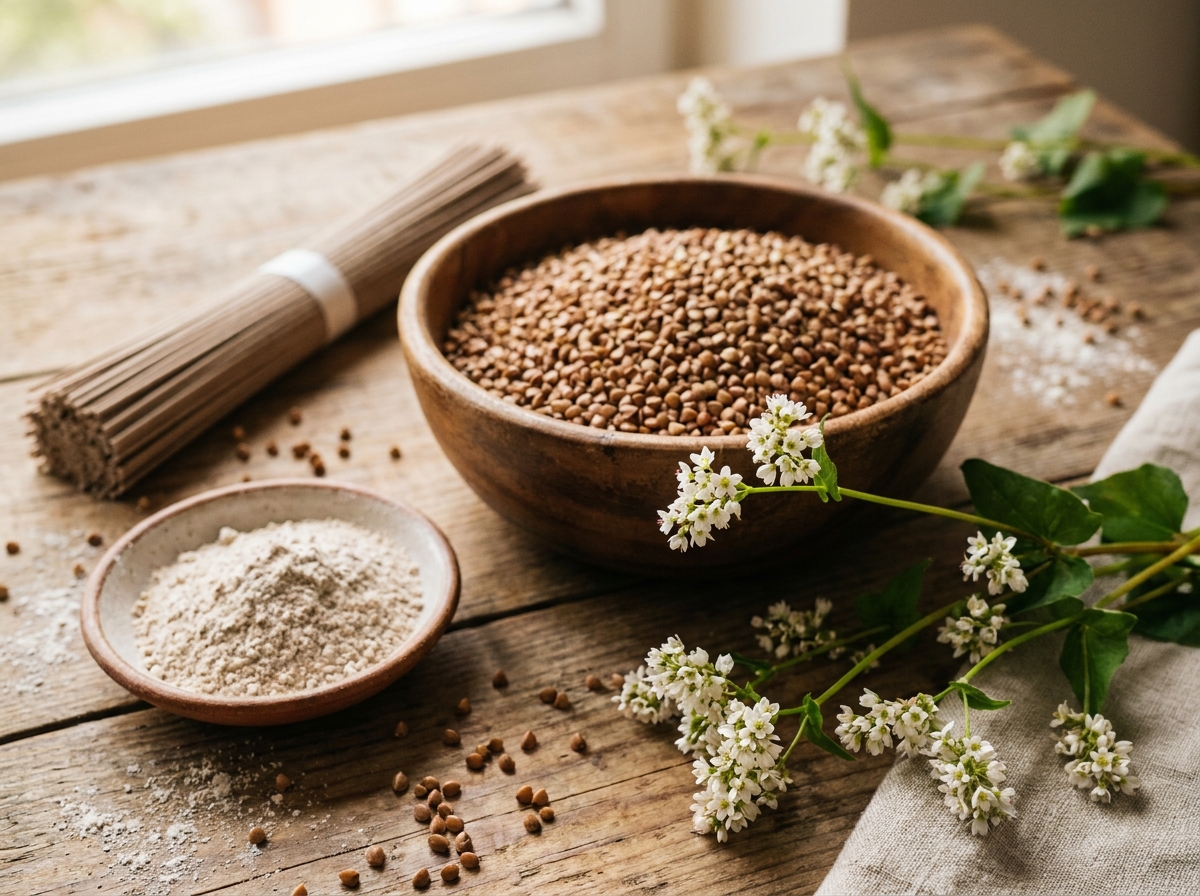
Because buckwheat contains no gluten whatsoever, foods made from 100% buckwheat — like the soba noodles at Shimbashi — are naturally gluten-free soba. This makes it fundamentally different from wheat, barley, and rye. The word “buckwheat” comes from the Dutch boekweit, meaning “beech wheat” — a reference to the triangular seed shape, which resembles a beech nut, not to any relationship with wheat.
How Buckwheat Is Grown
Buckwheat is a short-season crop — it grows from seed to harvest in as little as 10 to 12 weeks. Key characteristics:
- Prefers cool, moist conditions — it struggles in heat and drought
- Grows well in poor soil — it does not require the nitrogen-rich conditions that wheat or corn need
- Flowers quickly and abundantly — buckwheat flowers are an important source of nectar for bees
- Not frost-tolerant — it must be planted after the last frost and harvested before the first
Tasmania, where Shimbashi sources its buckwheat, provides near-ideal growing conditions: a cool temperate climate, clean rainfall, and fertile volcanic and alluvial soils in the island’s interior valleys.
Buckwheat Nutrition: What Is Buckwheat Good For?
Buckwheat has an unusually strong nutritional profile compared to most starchy foods:
| Nutrient | Per 100g (cooked buckwheat) |
|---|---|
| Calories | ~92 kcal |
| Protein | ~3.4g |
| Carbohydrates | ~20g |
| Dietary fibre | ~2.7g |
| Fat | ~0.6g |
| Manganese | ~0.4mg (20% RDI) |
| Magnesium | ~51mg (12% RDI) |
| Phosphorus | ~118mg (17% RDI) |
Several things stand out:
- Complete-ish protein: Buckwheat contains all eight essential amino acids, with relatively high levels of lysine — an amino acid that is low in most grains. This makes buckwheat protein more nutritionally complete than wheat or rice protein.
- Rutin: Buckwheat is one of the richest dietary sources of rutin, a flavonoid antioxidant associated with cardiovascular health. Rutin is most concentrated when the bran is included in the flour.
- Low glycaemic index: Despite being a starchy food, buckwheat has a relatively low glycaemic index — meaning it causes a slower, more gradual rise in blood sugar compared to white rice or wheat noodles.
- No gluten: Buckwheat contains no gluten proteins, making it safe for people with coeliac disease and wheat sensitivity.
What Is Buckwheat Used For?
Buckwheat appears in food cultures across the Northern Hemisphere. The most common uses:
- Soba noodles (Japan): The most refined buckwheat food tradition. Soba noodles are made from buckwheat flour, sometimes blended with wheat. Ni-hachi means 20% wheat, 80% buckwheat; juwari means 100% buckwheat.
- Naengmyeon (Korea): Cold buckwheat noodles served in chilled broth or with a spicy sauce.
- Kasha (Russia/Eastern Europe): Roasted buckwheat groats cooked as a porridge or used as a side dish.
- Galettes de sarrasin (France): Savoury crêpes made from dark buckwheat flour, a speciality of Brittany.
- Pizzoccheri (Italy): Flat, dark buckwheat pasta from the Valtellina region of northern Italy.
- Kuttu ka atta (India): Buckwheat flour used for fasting foods during Hindu religious observances.
What Is Buckwheat Flour and Buckwheat Groats?
Like wheat, buckwheat can be milled at different levels of refinement:
- What is buckwheat groats? Groats are the whole seed with the outer hull removed. Used in porridges (kasha), as a rice substitute, and in salads.
- Dark buckwheat flour: Milled from the whole seed including the bran. Darker in colour, stronger in flavour, higher in fibre and rutin. Used for traditional Japanese soba.
- White buckwheat flour: Milled from the inner part of the seed only. Lighter in colour and milder in flavour, but lower in nutrients.
For soba noodles, the type of flour and how freshly it is milled has a significant impact on the final product. If you are curious how this translates at the table, our guide to how to eat soba noodles explains the full experience from ordering to sobayu.
Why Stone-Milling Matters
Commercial buckwheat flour is typically milled using high-speed steel roller mills. The process is fast but the friction and heat generated begin to degrade the volatile aromatic compounds responsible for buckwheat’s characteristic nutty flavour.
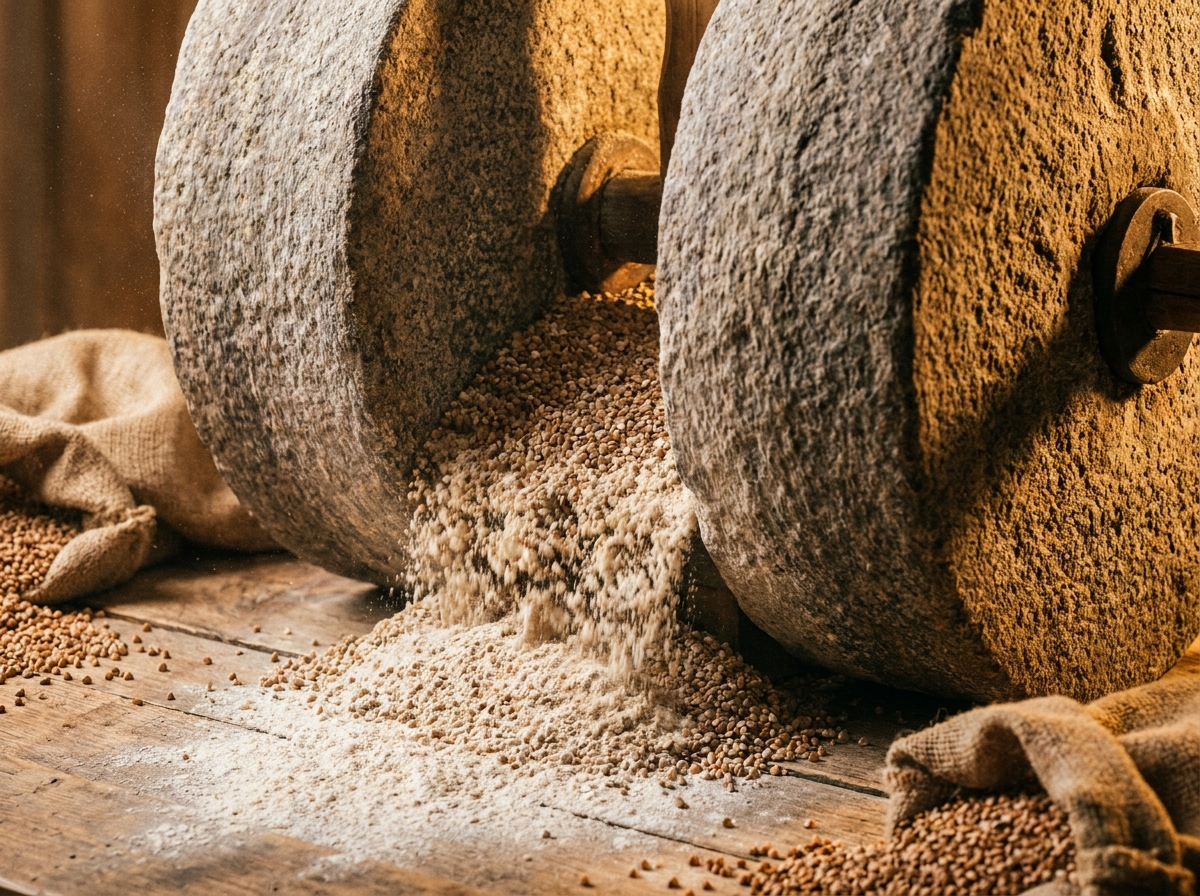
Stone milling uses two slowly rotating stone wheels. The process is cooler, gentler, and preserves more of the aromatic compounds in the flour. Stone-milled buckwheat flour smells distinctively earthier and nuttier than commercially milled flour.
At Shimbashi, Tasmanian buckwheat is stone-milled fresh each day in the restaurant. It is the same reason that freshly ground coffee smells so much more intense than coffee that was ground a week ago.
What Is Buckwheat Noodles vs Regular Pasta?
What is buckwheat noodles versus regular pasta? The key differences come down to three things: ingredient (a seed plant, not wheat), flavour (nutty and earthy rather than neutral), and texture (firm and slightly grainy rather than smooth and elastic). For a direct comparison of soba with ramen and udon, see our overview of soba and other noodles.
Tasmanian Buckwheat: Why It Matters for Soba
Not all buckwheat is the same. Growing conditions — soil chemistry, climate, water — affect the flavour and composition of the seed. Tasmanian buckwheat is grown in a clean, cool, and relatively pollution-free environment. The island’s separation from mainland Australia reduces exposure to agricultural chemicals and environmental stressors common in more intensively farmed regions.
Shimbashi has built its entire offering around Tasmanian buckwheat as the premium source for its noodles. Milling it in-house each day ensures that the quality of the raw ingredient is fully expressed in the finished dish — not diluted by time or heat during processing.
If you have eaten soba and found it mild, slightly bland, or unremarkable, there is a good chance it was made from pre-milled commercial flour, possibly blended with wheat. Soba made from freshly stone-milled 100% Tasmanian buckwheat is a genuinely different experience — and understanding what buckwheat is helps explain exactly why.