
SHIMBASHI
gluten-free / soba noodles / sushi / bar
Melbourne made
vegetarian + vegan friendly
Ramen vs Soba vs Udon: What's the Difference?
Japan is a country that takes its noodles seriously. Walk down any street in Tokyo, Osaka, or Kyoto and you'll find dedicated noodle shops — each one specialising in a single dish, perfecting it over decades. But if you're new to Japanese cuisine, the differences between ramen, soba, and udon can feel a little overwhelming. Same bowl, different noodle — right?
Not quite. These three noodles are worlds apart in terms of ingredients, texture, flavour, and how they're served. Here's everything you need to know.
Quick Comparison: Ramen, Soba and Udon at a Glance
| Ramen | Soba | Udon | |
|---|---|---|---|
| Base ingredient | Wheat + kansui | Buckwheat + wheat | Wheat flour |
| Colour | Pale yellow | Brown/grey | White |
| Thickness | Thin | Thin–medium | Thick |
| Texture | Springy, firm | Soft, earthy | Chewy, dense |
| Served | Hot (mostly) | Hot or cold | Hot or cold |
| Broth | Rich, complex | Light, delicate | Simple, savoury |
| Gluten-free? | No | Partially | No |
What Is Ramen?
Ramen is arguably Japan's most iconic noodle dish — and one of its most beloved exports. Originally derived from Chinese noodle dishes in the late 19th century, ramen was quickly adopted and transformed by Japanese cooks into something entirely their own.
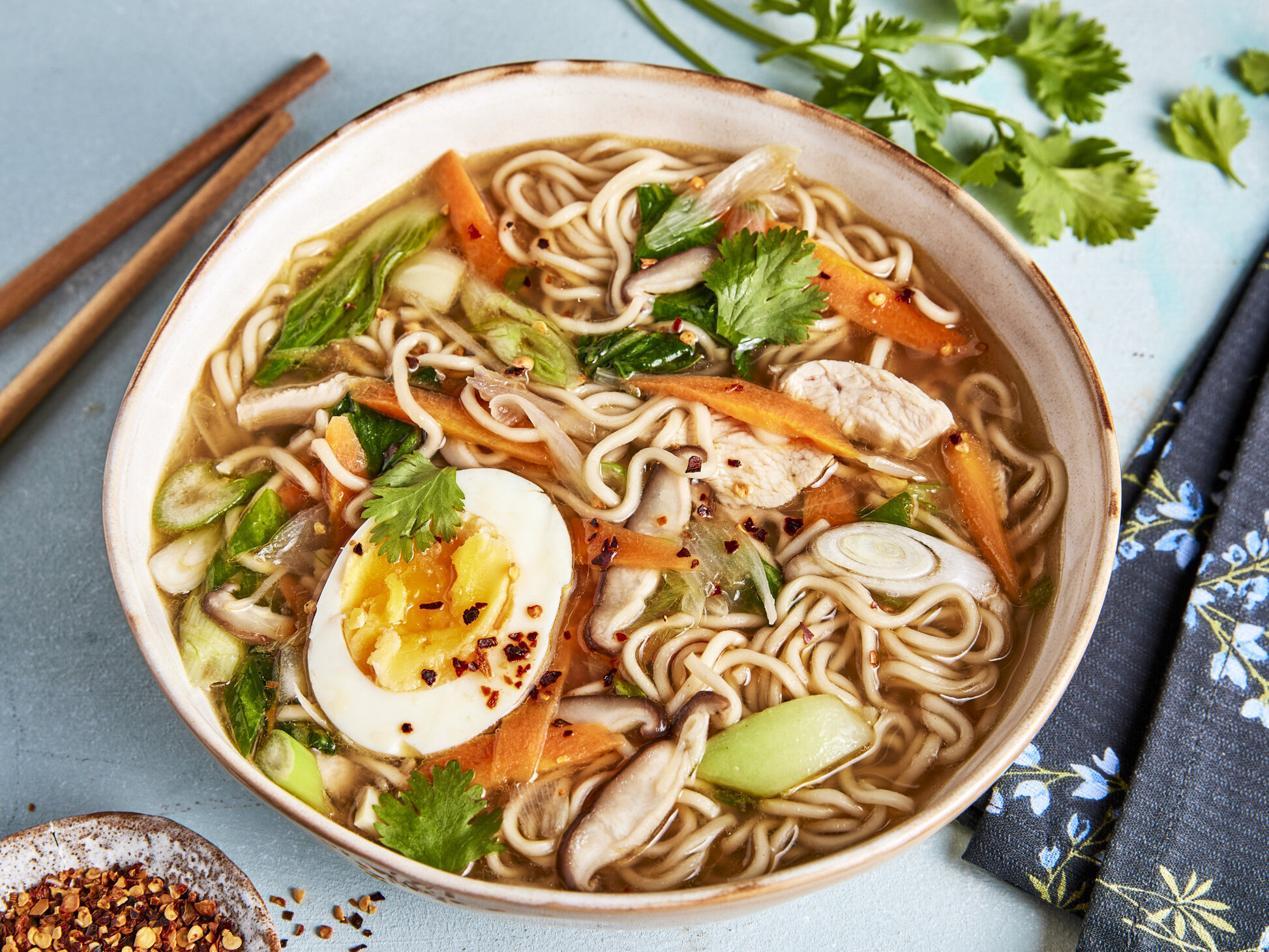
Ramen Noodles: Ingredients and Texture
Ramen noodles are made from wheat flour, salt, water, and kansui — an alkaline mineral water that gives them their distinctive pale yellow colour and firm, springy texture. They're typically thin and slightly wavy or curly, designed to hold onto broth with every bite.
Types of Ramen Broth
The broth is what truly defines ramen, and Japan's regions each have their own signature style:
- Shoyu (soy sauce) — light, clear, and savoury; the classic Tokyo style
- Shio (salt) — the lightest and most delicate of all broths
- Miso — rich, thick, and deeply flavourful; popularised in Hokkaido
- Tonkotsu (pork bone) — creamy, heavy, and intensely porky; from Kyushu
Popular Ramen Dishes and Toppings
A bowl of ramen is a full composition. Common toppings include chashu (braised pork belly), a soft-boiled marinated egg (ajitsuke tamago), nori (dried seaweed), bamboo shoots (menma), and green onions. Beyond soup, ramen noodles are also used in Yakisoba — a popular stir-fried street food dish.
What Is Soba?
Soba is one of Japan's oldest noodle traditions, with roots going back centuries. It's quieter and more understated than ramen — but for many Japanese people, it's the most refined noodle of all.
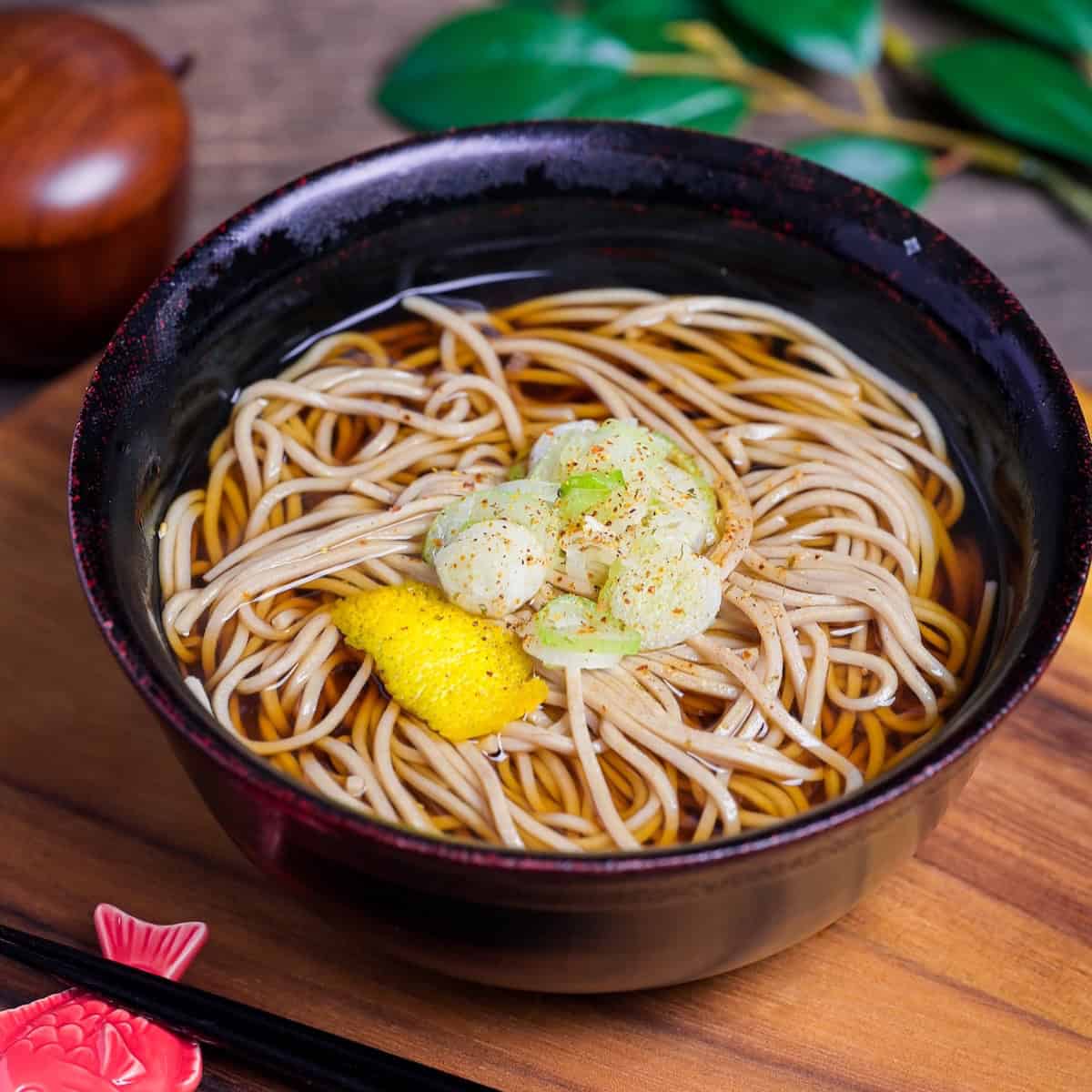
Soba Noodles: Buckwheat, Flavour and Texture
Soba noodles are made from a mix of buckwheat flour and wheat flour. The proportion of buckwheat varies between makers — the higher the buckwheat content, the more earthy and nutty the flavour. The colour ranges from light grey to deep brown. Unlike ramen, soba has a softer, less elastic texture and absorbs broth beautifully.
Hot vs Cold Soba: How to Serve It
One of soba's defining characteristics is its versatility in temperature. In summer, Zaru Soba — cold soba served on a bamboo tray with a chilled dipping sauce (tsuyu) on the side — is a refreshing staple. In winter, hot soba in a light dashi-based broth is the go-to comfort dish.
Popular Soba Dishes
- Tempura Soba (Tensoba) — hot or cold soba topped with crispy tempura prawns
- Zaru Soba — chilled soba served on bamboo with tsuyu dipping sauce
- Matcha Soba — noodles made with buckwheat and matcha powder, served cold
- Toshikoshi Soba — a New Year's Eve tradition; eating soba symbolises letting go of hardships and embracing longevity
What Is Udon?
Udon is the thickest of Japan's three major noodles — wide, white, and wonderfully chewy. Where ramen is complex and soba is delicate, udon is hearty and satisfying.
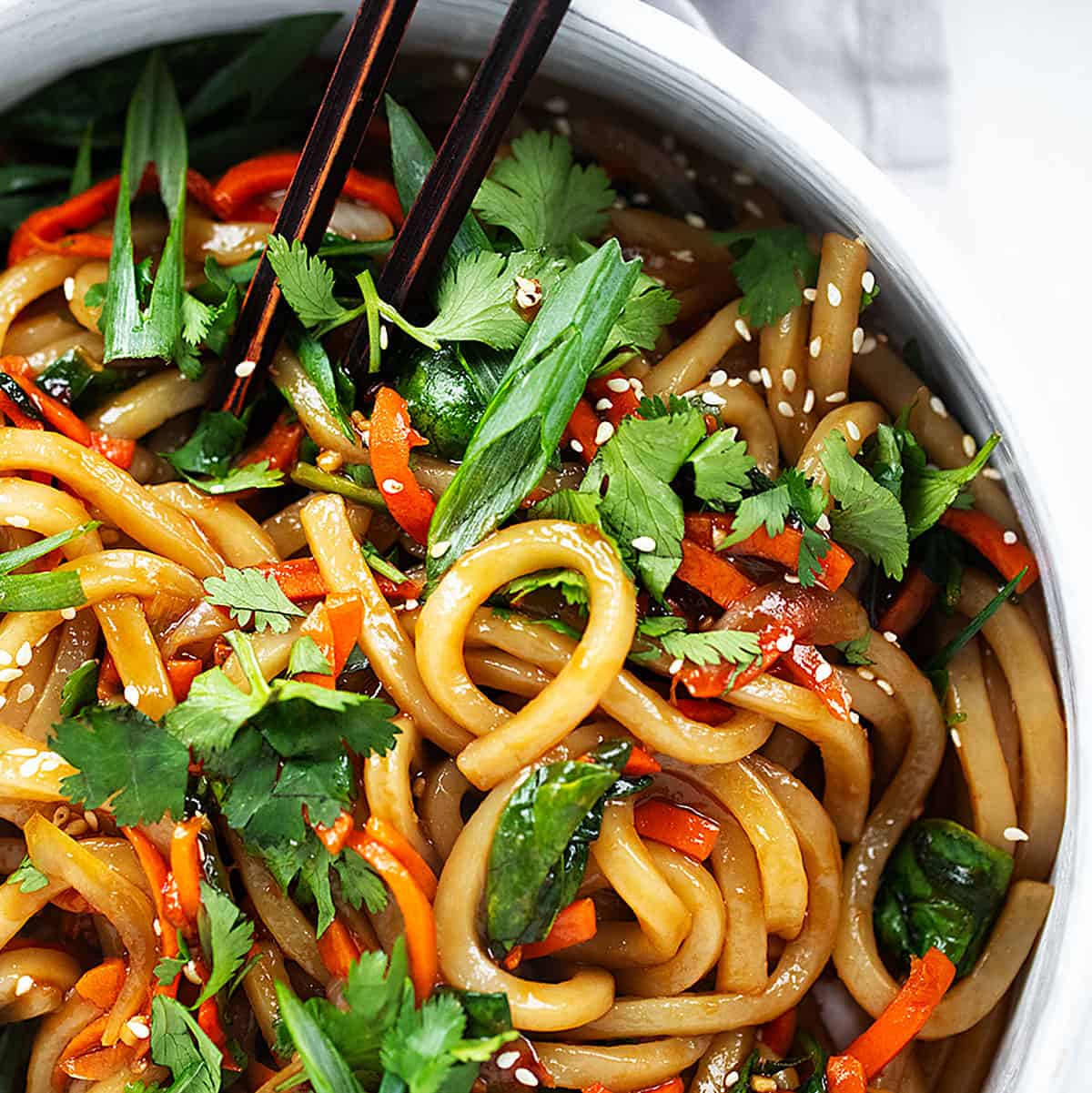
Udon Noodles: Thick, Chewy and Versatile
Made from just wheat flour, salt, and water, udon noodles are pure white and substantially thicker than both ramen and soba. Their chewiness — koshi in Japanese — is their most celebrated quality. The dough is traditionally kneaded by foot to develop its characteristic dense texture.
Udon Broth Styles Across Japan
Classic udon broth (kakejiru) is made from dashi, mirin, and soy sauce — simple, clean, and deeply savoury. Regional variations are notable: in eastern Japan, darker koikuchi shoyu produces a richer broth, while western Japan favours the lighter usukuchi shoyu for a paler, more subtle flavour.
Popular Udon Dishes
- Kake Udon — the purest form: noodles in a simple kakejiru broth with chopped scallions
- Kitsune Udon — "fox udon," topped with sweetened fried tofu (aburaage)
- Chikara Udon — "power udon," topped with grilled mochi that melts into the broth
- Curry Udon — udon in a rich Japanese curry broth; spicy, warming, and addictive
- Yaki Udon — stir-fried udon with vegetables and meat, similar to yakisoba
Ramen vs Soba vs Udon: Key Differences Explained
Ingredients: What Are They Made Of?
The most fundamental difference is the flour. Ramen and udon are both wheat-based, while soba introduces buckwheat — which changes everything: colour, flavour, texture, and nutritional profile. Ramen has one additional unique ingredient — kansui — which no other Japanese noodle uses. This alkaline water is what makes ramen noodles yellow and springy.
Texture and Thickness
- Udon — thickest, chewiest, most substantial
- Ramen — thin, springy, bouncy
- Soba — thin to medium, soft, slightly grainy from buckwheat
Flavour Profile
- Ramen — defined almost entirely by its broth; the noodle itself is neutral
- Soba — has its own distinctive earthy, nutty flavour from buckwheat
- Udon — very mild and neutral; flavour comes from the broth and toppings
Hot or Cold? How Each Noodle Is Served
Ramen is almost exclusively served hot. Soba is equally at home hot or cold — Zaru Soba being a summer classic. Udon is served both ways depending on season, though hot preparations are more common outside of Japan.
Which Japanese Noodle Is Healthiest?
Soba and Gluten: Is Soba Gluten-Free?
Soba is often marketed as a healthier option — and there's truth to that. Buckwheat is a complex carbohydrate rich in protein, fibre, and minerals like manganese and magnesium. However, the question of whether soba noodles gluten free status holds up depends on the recipe — most contain a proportion of wheat flour alongside buckwheat. Only 100% buckwheat soba (juwari soba) is truly gluten-free — always check the label.
Calorie and Nutrition Comparison
| Ramen (per 100g dry) | Soba (per 100g dry) | Udon (per 100g dry) | |
|---|---|---|---|
| Calories | ~350 kcal | ~330 kcal | ~350 kcal |
| Protein | ~12g | ~14g | ~10g |
| Fibre | ~2g | ~3g | ~2g |
| Gluten | Yes | Partially | Yes |
Where to Try Authentic Japanese Noodles in Melbourne
Melbourne has one of Australia's most vibrant Japanese food scenes — and Shimbashi Soba is at the heart of it. We specialise in hand-crafted soba noodles made fresh daily using traditional Japanese techniques, served both hot and cold in the authentic style. Whether you're new to soba or a seasoned noodle lover, our menu is the best place to discover what makes Japanese noodles so extraordinary.
Come and taste the difference for yourself. We're in Collingwood, Northcote, and Carlton North, Tuesday through Sunday. Book a table — or just rock up and we'll sort you out.
FAQ: Japanese Noodles Explained
What is the difference between ramen and udon?
Ramen noodles are thin, yellow, and springy — made with wheat flour and kansui. Udon noodles are thick, white, and chewy — made with just wheat flour, salt, and water. Ramen broths are typically richer and more complex, while udon broth is simpler and more delicate.
What is the difference between udon and soba noodles?
Udon is thick, white, and made purely from wheat flour with a mild flavour. Soba is thinner, brown-grey, and made from buckwheat and wheat flour with a distinctive earthy, nutty taste.
Is soba healthier than ramen?
Generally yes — soba contains buckwheat, which is higher in protein, fibre, and minerals than regular wheat flour. However, the overall health profile of any noodle dish depends heavily on the broth and toppings.
Can I eat soba if I'm gluten intolerant?
Most soba noodles are not gluten-free as they contain wheat flour alongside buckwheat. Only 100% buckwheat soba (juwari soba) is suitable for those with gluten intolerance. Always check with the restaurant or manufacturer.
Which Japanese noodle is best for beginners?
Ramen is the most familiar entry point for most people — its rich broth and bold flavours are immediately accessible. Udon is an excellent second step: mild, comforting, and versatile. Soba rewards the adventurous palate with its subtle, earthy complexity.
What does kansui do to ramen noodles?
Kansui is an alkaline mineral water used in ramen noodle production. It raises the pH of the dough, which causes a chemical reaction with the wheat flour that produces ramen's characteristic yellow colour and springy, firm texture.