
SHIMBASHI
gluten-free / soba noodles / sushi / bar
Melbourne made
vegetarian + vegan friendly
How to Eat Soba Noodles Correctly
Soba noodles have been eaten in Japan for more than four hundred years, and in that time a set of customs has grown around them. Some are about flavour. Some are about respect for the craft. Some are simply good manners that make the experience better. If you are visiting Shimbashi Soba Melbourne for the first time — or returning and wanting to go deeper — this guide covers everything you need to know about how to eat soba noodles correctly.
Why Soba Has Its Own Etiquette
Soba is not fast food, even when it is served quickly. At Shimbashi, where the noodles are made fresh each day from stone-milled Tasmanian buckwheat, the soba you receive has been through a careful, skilled process. The etiquette around eating soba exists partly to honour that process — and partly because certain habits genuinely make the food taste better.
If you are curious about the ingredient itself — what buckwheat actually is, why it is not wheat, and what makes Tasmanian buckwheat worth stone-milling daily — our guide covers stone-milled Tasmanian buckwheat in full detail.
The Basics: Zaru Soba vs Hot Soba
Before you order, it helps to understand the two main categories:
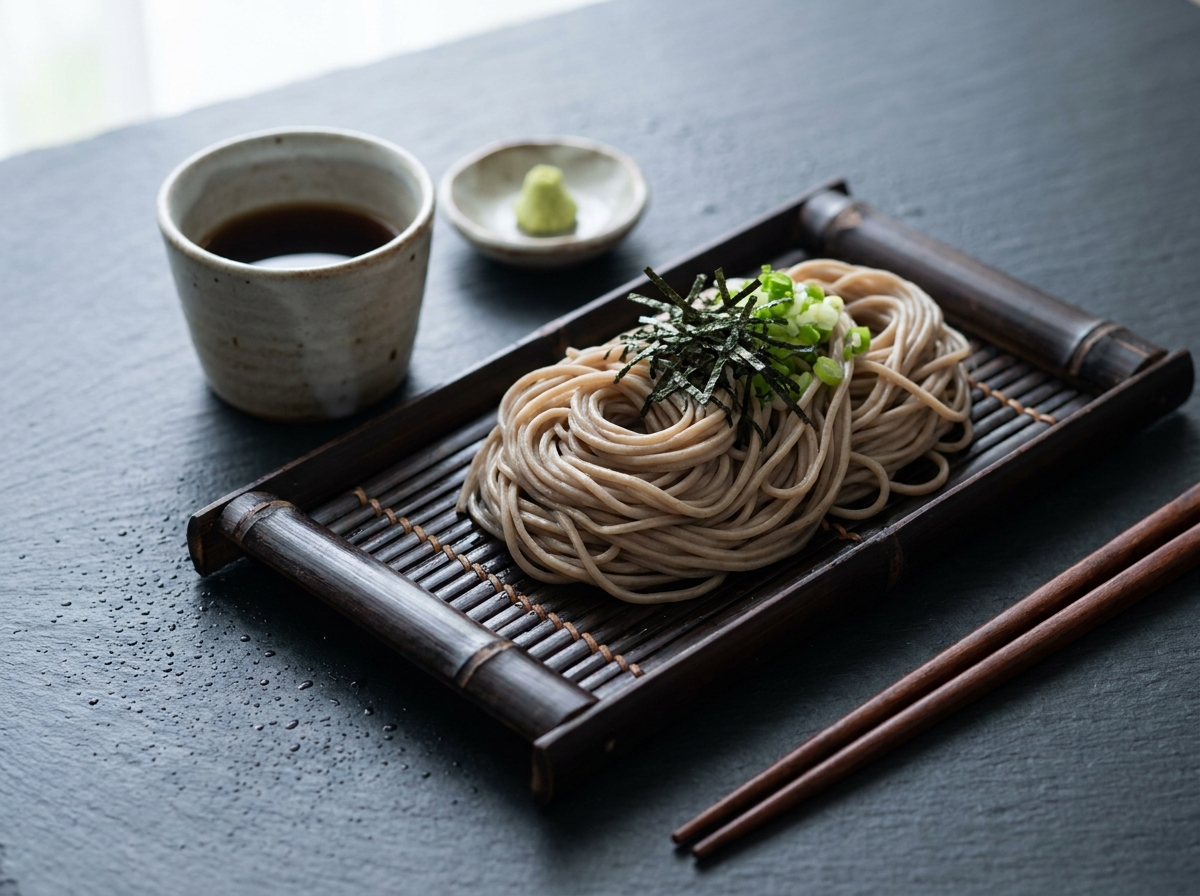
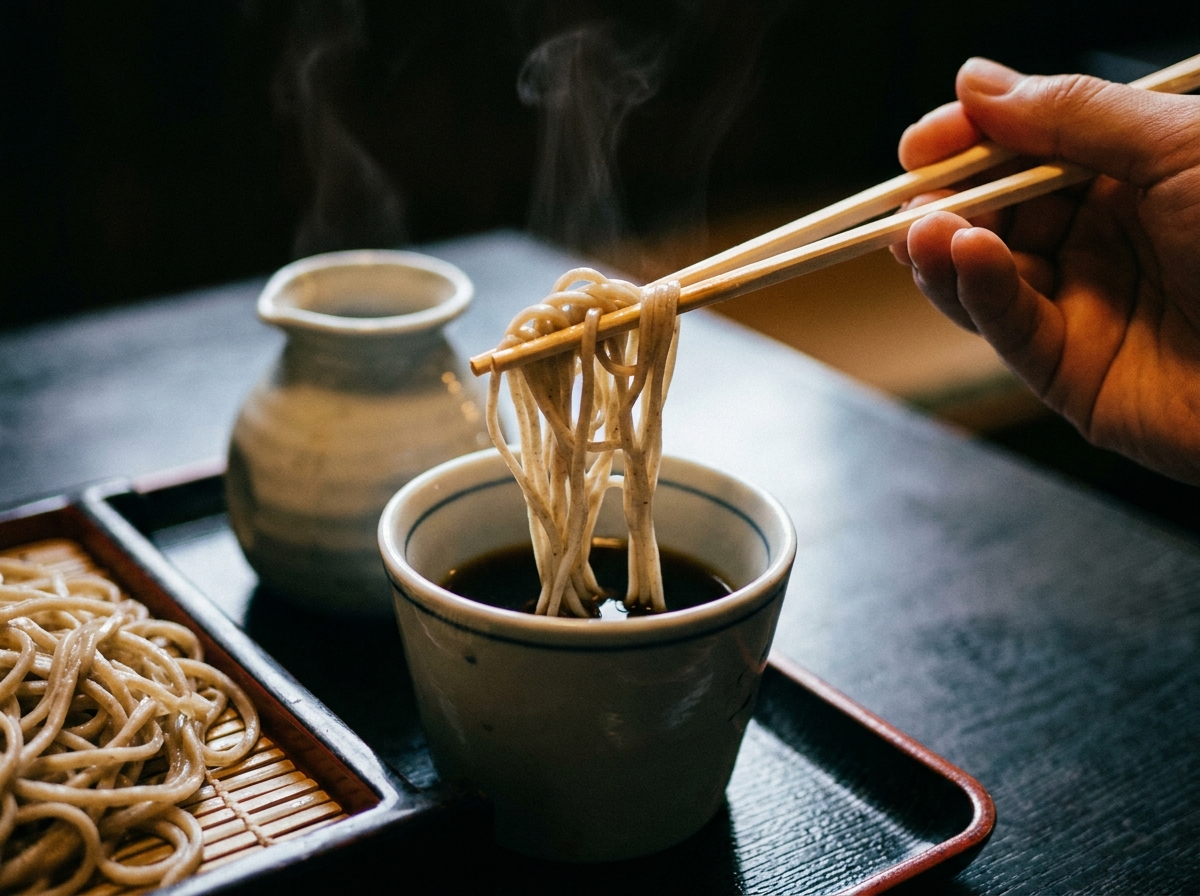
- Zaru soba (cold): Noodles served on a bamboo tray, chilled, with a separate dipping sauce (tsuyu). You pick up a small bundle of noodles with chopsticks, dip them into the sauce, and eat.
- Kake soba (hot): Noodles served in a bowl of hot dashi-based broth. Eaten like a soup noodle dish.
Cold soba is generally considered the purest way to taste the buckwheat flavour, because nothing masks the noodle. If it is your first time, zaru soba is the recommended choice. Knowing how to eat cold soba noodles properly — especially the dipping technique — makes a real difference to how the dish tastes.
How to Eat Cold Soba: Step by Step
1. Start plain
Before adding condiments, take one or two bites of the noodle alone — no sauce. This lets you taste the buckwheat itself. Good soba has a nutty, slightly earthy flavour with a firm, silky texture. This is the correct way to eat soba noodles in Japan, and it remains the approach at quality soba restaurants in Tokyo and Kyoto.
2. Dip, don’t drown
When you are ready to add sauce, the key to how to eat soba noodles with dipping sauce is to dip only the bottom third to half of the noodle bundle into the tsuyu. Do not submerge the entire bunch. The dipping sauce is concentrated and salty — partial dipping gives you seasoning while letting the noodle flavour remain present.
3. Adjust with condiments
Most soba comes with small condiments on the side:
- Wasabi: Mix a small amount into your tsuyu, or place it directly on the noodles
- Negi (spring onion): Add to the dipping sauce for a fresh, sharp note
- Nori (seaweed): Already placed on zaru soba; pick it up with the noodles when dipping
4. Slurp without apology
In Japan, slurping noodles is not rude — it is normal and, according to many soba chefs, actually enhances the flavour by aerating the noodle as it enters your mouth. It also cools the noodle slightly as you eat. At Shimbashi, and at any authentic soba restaurant, slurping is entirely appropriate.
5. Drink the sobayu
At the end of your cold soba, the server will typically bring a small jug of sobayu — the warm, starchy water the noodles were cooked in. This is poured into your remaining tsuyu sauce, creating a light, savoury drink. Drinking sobayu is a traditional practice and considered a sign that you have enjoyed your meal. It is also genuinely good — warm, slightly nutty, and very comforting.
How to Eat Hot Soba
Hot soba is more straightforward. It arrives in a bowl of broth and is eaten with chopsticks and a ceramic spoon for the soup:
- Pick up noodle bundles with chopsticks and eat them before they become too soft
- Sip the broth between bites — it is an important part of the dish, not a background liquid
- Add condiments like shichimi (seven-spice blend) or wasabi sparingly
- Eat relatively quickly — soba noodles soften in hot broth faster than ramen or udon
For more on how soba differs from those other noodles in terms of texture, broth, and cooking method, see our guide to soba versus ramen and udon.
What Not to Do
- Don’t cut the noodles. In Japanese tradition, long noodles represent longevity. More practically, cutting them makes them harder to pick up and disrupts the texture.
- Don’t over-dip. Drowning the noodles in tsuyu overwhelms the buckwheat flavour and makes the dish too salty.
- Don’t waste sobayu. Asking for sobayu and then not drinking it is considered wasteful of the kitchen’s work.
- Don’t rush the first bite. Fresh soba is a genuinely different product from dried packaged soba. Take a moment to notice the texture and aroma.
How to Order at Shimbashi
Shimbashi Soba & Sake Bar serves fresh, handmade soba from 100% Tasmanian buckwheat, milled in-house each day. When ordering:
- For the purest soba experience: Order zaru soba or a simple cold dish where the noodle is the focus
- For a fuller meal: Soba sets that include sides like tempura, sushi, or a small salad
- For dietary needs: All food at Shimbashi is gluten-free and dairy-free — for a full breakdown, see our gluten-free soba guide
- For drinks: The sake list is extensive. Ask staff for a recommendation — a lightly sparkling nigori sake or a dry junmai pairs well with soba
Lunch sets are a particularly good value entry point if you are visiting for the first time.
Why Fresh-Milled Soba Tastes Different
Most soba noodles — including those in supermarkets and many restaurants — are made from commercially milled buckwheat flour that was ground days, weeks, or months before use. Buckwheat contains volatile aromatic compounds that begin to oxidise once the grain is milled. Fresh-milled flour retains these compounds, giving the noodles a more complex, nutty flavour and a slightly different texture.
Shimbashi mills its Tasmanian buckwheat on-site each day, which is why the soba served there tastes noticeably different from packaged versions. This is the same approach used by premium soba restaurants in Tokyo and Kyoto — establishments where eating soba is a considered culinary experience rather than a quick meal.
Soba as a Mindful Meal
There is a Japanese concept — ichiju sansai (“one soup, three sides”) — that underpins traditional Japanese meal structure. Soba fits naturally into this framework: the noodle is the centre, the broth or dipping sauce is the complement, and small sides provide balance. Eating soba attentively, in the way described in this guide, is a form of the mindfulness that runs through much of Japanese food culture.
Whether you are a regular at Shimbashi or about to walk through the door for the first time, these habits will make the experience more satisfying — and the noodles will taste better for it.