
SHIMBASHI
gluten-free / soba noodles / sushi / bar
Melbourne made
vegetarian + vegan friendly
Cold Soba vs Hot Soba: Which Should You Order?
If you're ordering soba for the first time — or even the tenth — the choice between cold soba and hot soba can be surprisingly confusing. Both are soba. Both are delicious. But they're eaten differently, they taste different, and they're suited to different moments. Understanding the distinction between hot soba vs cold soba makes the whole experience make more sense.
This guide covers how each style is served, what it tastes like, how to eat it, and which one to choose depending on the season, the dish, and your own preferences.
The Fundamental Difference
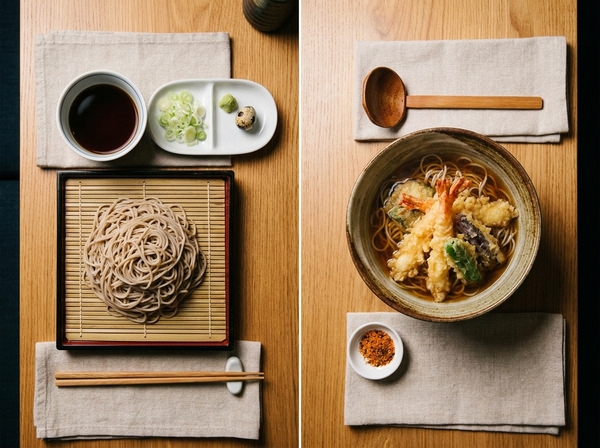
Cold soba is served chilled, rinsed in cold water after cooking, with dipping sauce on the side. Hot soba is served in a warm broth, eaten as a soup. That's the core distinction — not just temperature, but the entire eating method and flavour experience.
In Japan, the cold vs hot soba debate is partly seasonal: cold soba dominates spring and summer, hot soba appears more in autumn and winter. But serious soba lovers eat cold soba year-round, because chilling the noodles after cooking actually preserves their texture and makes the buckwheat flavour more pronounced.
Cold Soba: What It Is and How It's Served
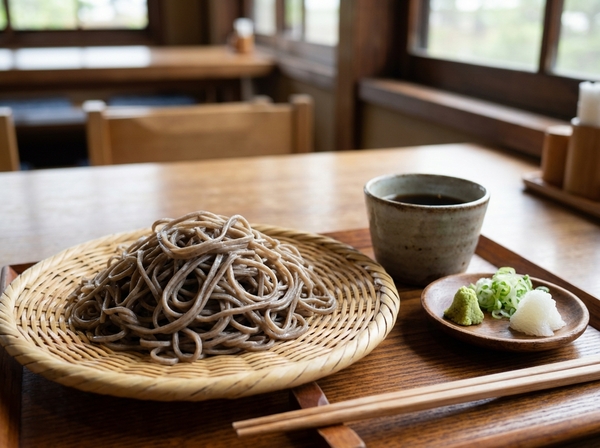
The most classic cold soba preparation is zaru soba — chilled noodles arranged on a bamboo mat (the zaru), served with a cold dipping sauce called tsuyu, plus small condiments on the side: grated wasabi, thinly sliced green onions, and grated daikon.
You eat zaru soba by lifting a small bundle of noodles with chopsticks, dipping the ends into the tsuyu, and drawing them into your mouth. You don't submerge the whole noodle — just the bottom third or so. The noodle's buckwheat flavour, the salty-sweet-umami dipping sauce, and the fresh condiments all work together.
At the end of a zaru soba meal in a traditional restaurant, you'll be served sobayu — the hot water the soba was cooked in. You pour this into your remaining tsuyu to make a warm soup to finish the meal. It sounds like a small touch, but it's part of the ritual and captures rutin and B vitamins that dissolved from the buckwheat during cooking.
Other cold soba preparations include oroshi soba (with grated daikon poured over the noodles) and tororo soba (with grated yam).
Hot Soba: What It Is and How It's Served
Hot soba — most commonly called kake soba in its simplest form — is served in a warm dashi broth seasoned with soy and mirin. The noodles sit in the broth and you eat everything together like a soup noodle dish.
Hot soba can be topped with a wide range of ingredients: tempura (tempura soba), kitsune (sweet simmered aburaage tofu), tororo (grated mountain yam), or simply a poached egg. The broth carries a lot of the flavour, and the toppings add depth and richness.
Eating hot soba is closer to eating ramen or udon — you use chopsticks to pick up the noodles and a spoon for the broth. Unlike cold soba, there's no separate dipping sauce.
Hot vs Cold Soba: How Do They Taste Differently?
Cold soba tends to have a cleaner, more distinct buckwheat flavour. Chilling the noodles firms their texture and makes each strand more defined. The dipping sauce adds flavour incrementally, which means you're tasting the soba itself more clearly.
Hot soba has a softer texture and absorbs the flavour of the broth more deeply. The umami of the dashi is prominent, and the noodle takes on a more comforting, rounded character. If you're new to soba, hot soba can be an easier entry point because the broth provides a familiar frame of reference.
Neither is objectively better — but serious soba enthusiasts often argue that cold soba lets the quality of the buckwheat speak more clearly. A freshly made, 100% buckwheat soba will reveal more of its character cold than hot.
Which Should You Order?
- If it's your first time eating soba — try cold soba (zaru). It lets you taste what authentic buckwheat soba actually is, without it being masked by broth.
- If it's winter and you want something warming — hot soba (kake, or tempura soba) is deeply satisfying.
- If you want to appreciate high-quality soba noodles — cold. Every time. The noodle is the centrepiece, not the accompaniment.
- If you're eating a quick lunch and want something light — cold soba with minimal toppings is fast, clean, and satisfying without being heavy.
- If you're less familiar with Japanese food flavours — hot soba with tempura is an accessible starting point.
Eating Soba Correctly: A Quick Primer
Whether you order hot or cold, a few points apply to both. Slurping is not rude — it's entirely normal and even encouraged, as it aerates the noodle and intensifies the flavour. Don't let soba sit: unlike pasta, soba continues to soften in broth or even in air, so eat it as soon as it arrives. And if you're eating cold soba, don't drown the noodles in dipping sauce — the ratio of noodle to tsuyu matters.
For a full guide to the etiquette and technique, see our page on how to eat soba noodles.
Still Not Sure Which to Choose?
At Shimbashi Soba Melbourne, our team is always happy to guide you through the menu. If you're curious how soba compares to other Japanese noodles, our guide on ramen vs soba vs udon is a good place to start. Come in and try both styles — it's the only real way to settle the hot soba vs cold soba debate for yourself.