
SHIMBASHI
gluten-free / soba noodles / sushi / bar
Melbourne made
vegetarian + vegan friendly
Toshikoshi Soba: Why Japan Eats Noodles on New Year's Eve
Toshikoshi soba translates roughly to "year-crossing noodles." Families across Japan eat a bowl of it on the evening of December 31st, usually right before midnight, and the habit goes back to at least the Edo period, somewhere in the 1700s depending on which regional record you trust.
Where the Tradition Actually Comes From
There are two competing origin stories, and neither has fully won out among food historians. The first, and the one told most often, centres on the noodle itself: soba snaps easily compared to udon or ramen, and eating it was thought to represent cutting ties with the hardships of the outgoing year before a new one starts clean. The long, thin shape also carries an older association with longevity, similar to the symbolism attached to long noodles in Chinese New Year traditions, though the Japanese version leans more toward "cutting away the old" than "extending life."
The second story is more commercial than symbolic. Soba merchants in the Edo period reportedly handed out free bowls to customers and workers at year's end as a gesture of thanks for their business over the past twelve months. Whichever story is closer to true, both point to the same period and the same basic gesture: a bowl of noodles marking the transition from one year into the next.
Regional Variation: There's No Single Correct Bowl
Ask ten Japanese households how they make toshikoshi soba and you'll likely get ten slightly different answers. Some serve it hot, in a plain kake-style broth with sliced scallions. Others go cold, dipped in tsuyu the way you'd eat zaru soba on a summer afternoon, though the cold version is less common specifically for New Year's Eve given the season.
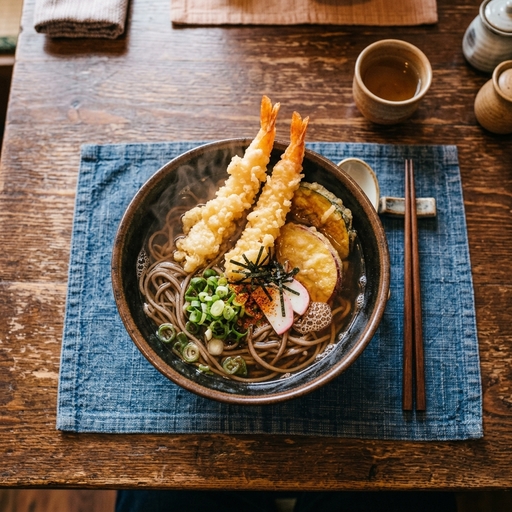
Toppings shift by region in ways that map onto local food culture more broadly. Tokyo-style bowls often carry tempura, usually shrimp. Osaka leans toward abura-age, sweetened fried tofu pouches. Parts of the Kyoto region favour herring, nishin soba, a pairing that dates back to when dried fish was a practical way to add protein to a noodle dish during winter months.
What doesn't shift, regardless of region, is the timing. It has to be soba, not udon or ramen substituted for convenience, and it has to be eaten before the year turns over. Leaving noodles unfinished past midnight is widely considered bad luck for the year ahead.
How It Fits Into the Broader New Year's Eve Evening
Toshikoshi soba rarely stands alone as an event. In many households it's eaten while watching Kohaku Uta Gassen, the long-running televised music competition that airs every December 31st, or after a visit to a local temple for joya no kane, the ringing of the temple bell 108 times at midnight, once for each of the worldly desires said to cause human suffering in Buddhist teaching.
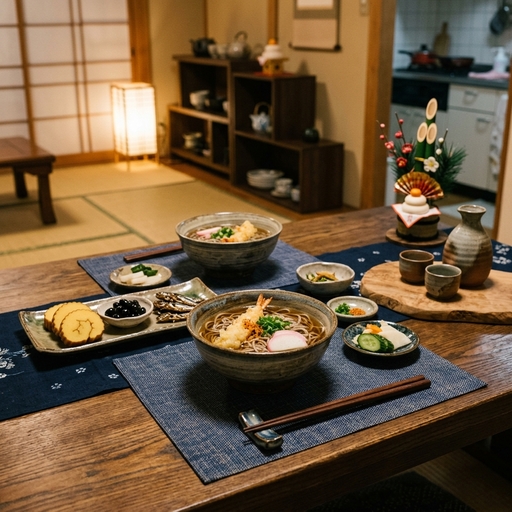
The soba itself tends to be a modest, almost background part of the evening rather than a showpiece meal. That's partly the point. New Year's Eve dinner in most households isn't the big feast; that comes the next day, or over the following days, with osechi ryori, the elaborate boxed New Year dishes prepared in advance. Toshikoshi soba is simple by comparison, deliberately so, since it's meant to close out the old year rather than open the new one.
Making It at Home, Without Overcomplicating It
If you're still getting comfortable with eating soba noodles, toshikoshi soba is a forgiving place to start. There's no strict etiquette test the way there can be with a full kaiseki meal. Slurping is expected here, not rude, and doing it is actually thought to enhance the flavour by pulling more of the broth's aroma across the palate as you eat.
A basic version doesn't require much: buckwheat soba noodles, a dashi-based broth, soy sauce and mirin to season it, and sliced scallions on top. Tempura is optional, and a few pieces of good store-bought tempura reheated briefly works fine for a home version.
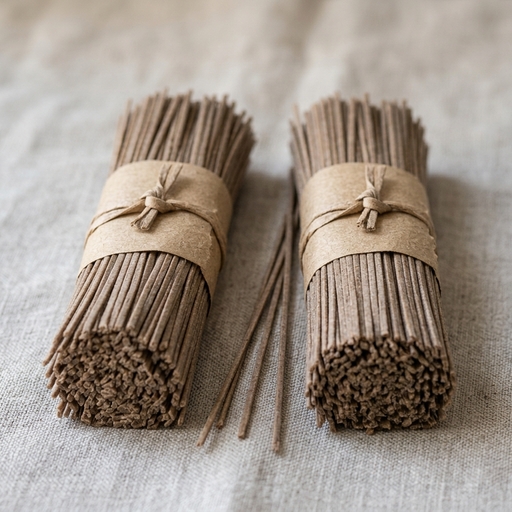
Getting the noodle right matters more than the toppings. Buckwheat soba, rather than the wheat-blended versions sold in some supermarkets under the same name, gets you closest to what's actually served in Japan on the night. Check the ingredient list specifically — some commercial "soba" is mostly wheat flour with a small percentage of buckwheat added for flavour and colour.
Taking Part Outside Japan
You don't need to be in Japan on December 31st for any of this to count. A bowl around the new year carries the same intent wherever you eat it, and outside Japan it's become a fairly common, low-stakes way to mark the transition without the production of a big dinner party.
It's the same balance of noodle and broth we build every bowl around here at Shimbashi Soba. If you're in Melbourne around New Year's and want the tradition without cooking it yourself, that's exactly the kind of night we see the most soba orders, and it's worth booking ahead given how many people have the same idea on the 31st.
Frequently Asked Questions
Do I have to eat toshikoshi soba exactly at midnight?
No, though tradition holds that it should be finished before the year turns over. Most households eat it sometime in the evening rather than precisely at the stroke of midnight.
Can I use dried soba instead of fresh?
Yes. Dried buckwheat soba is what most households actually use at home; fresh soba is more common in restaurants and specialty shops than in home kitchens.
Is toshikoshi soba served hot or cold?
Both exist, but hot is more common specifically for New Year's Eve given the season. Cold soba with tsuyu is more associated with summer eating.
What happens if I don't finish the bowl before midnight?
Nothing happens literally, but the superstition holds that leaving noodles unfinished symbolises an incomplete break from the old year's troubles. Most households treat it as a light-hearted tradition rather than something to worry about seriously.